Great Migration Safari Guide: Where the Herds Are, Month by Month
Where to see the wildebeest migration in each month, when the Mara River crossings happen, Kenya versus Tanzania, and what a migration safari costs in 2026.
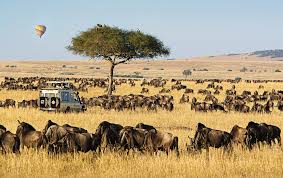
An East African safari with the Great Migration puts you in the middle of the largest movement of land animals on earth: well over a million wildebeest, with hundreds of thousands of zebras and gazelles, circling the Serengeti and the Maasai Mara in search of fresh grass. The herds never stop moving, so the right place to be depends entirely on the month.
This guide tells you where they usually are, when the famous river crossings happen, and how to plan a trip around them.
The Great Migration, month by month
The migration follows the rain, so timings shift by a few weeks from year to year. This is the typical pattern:
| Months | Where the herds usually are | What's happening |
|---|---|---|
| January–March | Southern Serengeti and the Ndutu area, Tanzania | Calving season. Hundreds of thousands of calves are born, mostly in February, and predators follow closely. |
| April–May | Central and southern Serengeti | Long rains. Herds spread out and start moving north and west. Fewer visitors, lower prices. |
| June | Western corridor, Serengeti | The herds gather and cross the Grumeti River, which has large crocodiles. |
| July–October | Northern Serengeti and the Maasai Mara, Kenya | Mara River crossings. Peak season and the most dramatic viewing. |
| November–December | Eastern and central Serengeti | Short rains bring the herds back south towards the calving grounds. |
The Mara River crossings
The crossings are why most people plan a migration safari. Thousands of wildebeest gather on the riverbank, sometimes for hours or days, then plunge in all at once while crocodiles wait in the water. Crossings usually happen between July and October, but no one can predict the exact day or hour.
A few things improve your chances:
- Stay at least three nights. The more days you spend near the river, the more likely you are to see a crossing.
- Plan full-day game drives with a packed lunch, so you don't leave the river just as the herd decides to go.
- Trust your guide's patience. Good guides read the herd, hold back so they don't block its path, and know when a crossing is close.
- Remember the rest of the Mara. Even on days without a crossing, the plains are full of wildebeest, zebras and the lions, cheetahs and hyenas that follow them.
Kenya side or Tanzania side?
The Maasai Mara (Kenya) is the easier choice for most people between July and October. The reserve is far smaller than the Serengeti, so when the herds arrive they are concentrated in a compact area. It is around five to six hours by road from Nairobi, or a short flight from Wilson Airport, which makes it practical even for a three or four-day trip.
The northern Serengeti (Tanzania) sees the same herds and the same river from the south bank. It is remote and usually reached by light aircraft, with fewer vehicles at many crossing points but a higher price.
For calving season (January to March), only Tanzania works: the herds are in the southern Serengeti and around Ndutu.
You can combine the two, but there is no direct road between the Mara and the Serengeti. The overland route goes around through the Isebania–Sirari border and takes most of a day, so most travellers fly between them. Our 10-day East African safari itinerary explains both options.
What a migration safari costs in 2026
Peak migration months are peak price months. The Maasai Mara National Reserve charges non-resident adults USD 200 per day from July to December, double the January to June rate of USD 100. Each ticket is valid for 12 hours. Lodges and camps near the river also charge their highest rates from July to October, and the best-placed ones book up many months ahead.
There's a timing trade-off worth knowing. The Mara fee rises on 1 July, but the herds don't arrive on a fixed date. A late June visit costs less in fees but may come too early for the main herds. A trip from mid-July onwards is the safer bet if the migration is your main goal. For a full breakdown, see our guide to Kenya safari costs in 2026.
How to plan a Great Migration safari from Nairobi
- Pick your month first, using the table above. For river crossings, aim for late July to early October.
- Book early. For July to September, six to twelve months ahead gives you the widest choice of camps.
- Give the Mara at least three nights. Short trips work, but the extra day makes a real difference for crossings.
- Add a contrasting park. Lake Naivasha, Lake Nakuru or Amboseli give you different scenery and animals, and a break from the busiest areas.
- Choose a private vehicle if you can. At a crossing, being able to stay put for hours matters more than anywhere else.
For a short trip, our Maasai Mara safari tours from Nairobi start at three days. If you want both countries, ask about our Mara–Serengeti fly-in safari.
Common questions
When is the best time to see the Great Migration in Kenya?
Usually from July to October, when the herds are in the Maasai Mara and crossing the Mara River. August and September are often the busiest months for crossings, but timings vary each year with the rain.
Is a river crossing guaranteed?
No. Crossings depend entirely on the herds' behaviour. Spending three or more days near the river and staying out for full days gives you the best chance.
Can I see the migration on a short safari from Nairobi?
Yes. Between July and October, a three or four-day Maasai Mara safari from Nairobi puts you among the herds. More days improve your odds of a crossing.
Is the Mara worth visiting outside migration season?
Yes. The Mara has resident lions, cheetahs, leopards, elephants and large herds of plains game all year, and the entry fee from January to June is half the peak rate.
Ready to plan your dates? Request a free quote and tell us when you'd like to travel.
Trips that match this guide
- 3-Day Maasai Mara Safari from Nairobi From USD 910 per person
- 4-Day Maasai Mara & Lake Naivasha Safari From USD 1,235 per person
- Mara–Serengeti fly-in safari From USD 3,200
Want it adjusted for your dates or budget? Request a free quote and a planner will reply with options.